

Some pool owners are retired, home every day, and happy to spend thirty minutes maintaining their pool each morning. They test the water, skim the surface, and vacuum the floor as part of a daily routine that they find meditative rather than burdensome. For them, automation is a convenience.
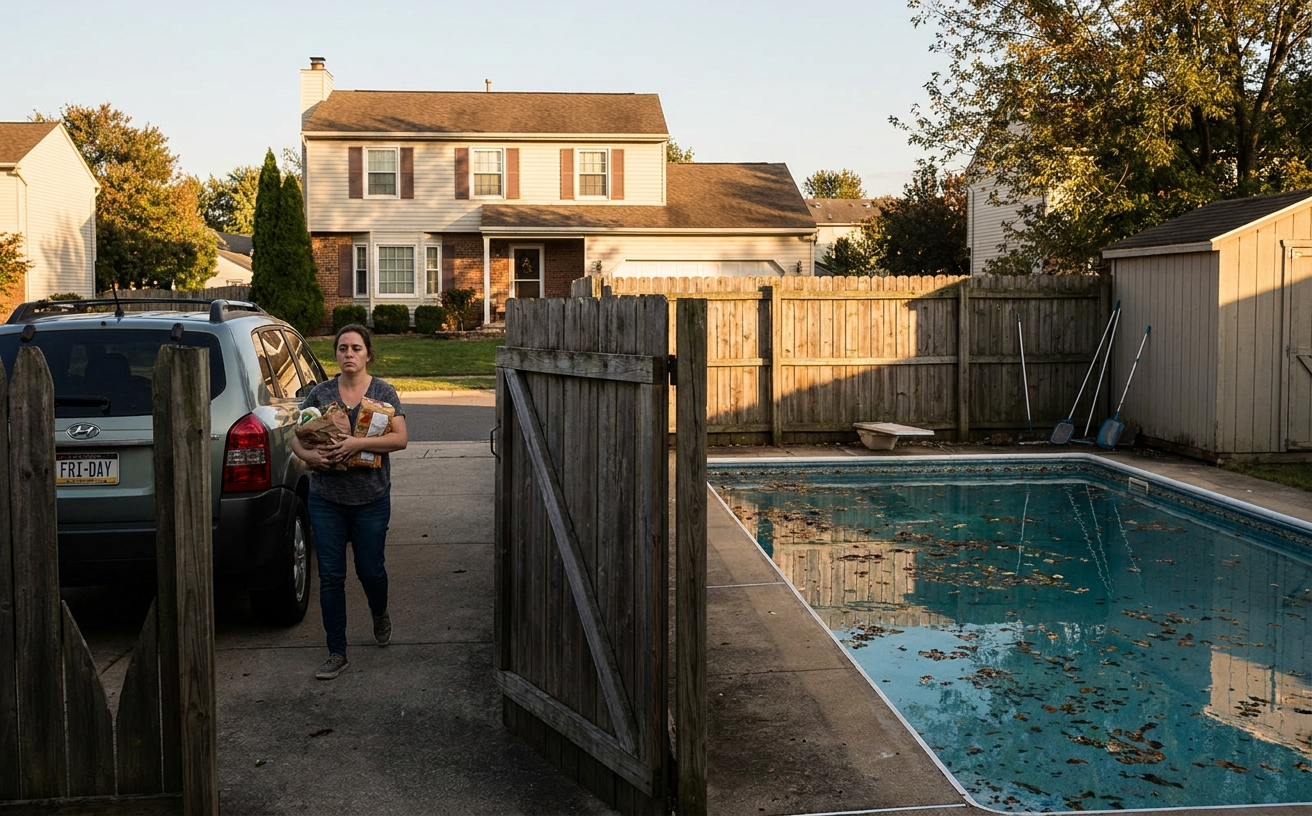
Other pool owners work full-time, commute, travel, and cram their pool maintenance into the margins of their weekends. They arrive home on Friday evening to a pool that has accumulated five days of debris and chemistry drift. Saturday morning is consumed by corrective maintenance rather than enjoyment. For them, automation is a necessity.
The Five-Day Neglect Cycle
A pool that receives no maintenance Monday through Friday accumulates debris, loses chlorine, and drifts out of chemical balance. The severity depends on the environment — a pool under trees degrades faster than one in an open yard — but every pool degrades without attention.
By Friday evening, the typical neglected pool has visible debris on the floor, a chlorine level below the minimum, and pH that has drifted outside the target range. The water may still look clear, but it is on the verge of problems that will be visible by Sunday if not addressed.
The weekend owner faces a choice: spend Saturday morning correcting the accumulated neglect, or skip the correction and hope the water holds until next weekend. Neither option is satisfactory. The first consumes the weekend. The second risks a water quality problem that requires even more time to resolve.
What Automation Solves for the Weekend Owner
A cleaning device that runs on a timer two to three times per week eliminates the debris accumulation entirely. The pool is free of settled debris every day, regardless of whether anyone is home to vacuum it. The Saturday morning vacuuming session disappears from the schedule.
The chemical benefit is less direct but equally important. Removing debris before it decomposes reduces the chlorine demand that accumulates during the week. The pool arrives at Friday evening with more stable chemistry than it would have without the cleaner, which means fewer and smaller chemical adjustments on Saturday morning.
A robotic pool cleaner that runs on a programmed schedule is the ideal solution for the absentee owner. Set the timer for Tuesday and Thursday, and the pool stays clean all week. Come home Friday to a pool that is ready for use, not one that needs two hours of work before the first swim.
What Automation Does Not Solve
Chemical testing still requires a person. No current consumer cleaning device measures or adjusts water chemistry automatically. The weekend owner must still test the water at least once during the weekend and add chemicals as needed. This is a five-minute task, not a two-hour one, but it cannot be skipped.
Surface skimming for floating debris is also not addressed by most underwater cleaning devices. A pool that accumulates leaves on the surface between weekend visits still needs someone to skim them off. An automatic surface skimmer — a separate device that attaches to the pool’s return jet — can partially address this gap.
The combination of an underwater cleaner and a surface skimmer covers most of the maintenance that accumulates during the week. The remaining tasks — testing and adjusting chemistry — take minutes rather than hours, and the weekend is reclaimed for swimming rather than scrubbing.
The Travel Problem
Weekend owners who also travel face extended periods of neglect. A two-week vacation without any pool maintenance can result in severe water quality problems that take a full week of corrective treatment to resolve. The cost of a single algae remediation — chemicals, time, and water replacement — can exceed the cost of a season’s worth of preventive cleaning.
A timer-controlled cleaner that runs every other day during extended absences prevents debris accumulation and maintains water circulation. Combined with a neighbor or pool service that tests chemistry once per week, the pool can survive a two-week absence without developing problems.
The alternative — hiring a weekly pool service for the duration of the trip — costs fifty to one hundred dollars per visit. Over a two-week trip, that is one hundred to two hundred dollars. A cleaning device pays for itself in avoided service calls within one to two vacation seasons.
Reclaiming the Weekend
The purpose of owning a pool is enjoyment. The purpose of maintaining a pool is to keep it enjoyable. When maintenance consumes the time that should be spent enjoying the water, the pool becomes a burden rather than an amenity.
Automation shifts the balance. Instead of spending Saturday morning correcting five days of neglect, the weekend owner spends five minutes testing chemistry and the rest of the weekend swimming. The pool is clean when you arrive home on Friday. The water is balanced. The only task is a quick chemistry check and you are done.
The weekend owner does not need automation as a luxury. They need it as a practical solution to a scheduling problem that makes pool ownership less rewarding than it should be. The machine does the work during the week so the owner can enjoy the pool on the weekend. That is not a convenience. That is the point.